I have lots of topics I want to touch on today, including: why the world wanted me to take five days off from swimming (closures at my two usual pools *and* my back-up pool for renovations and bad weather); why yoga pants make me want to cry (they are SO TIGHT!); why I’m buying yoga pants (hello, new fitness venture!); and why skipping your swim for the stationary bike isn’t so bad (especially when someone leaves a copy of the New Yorker for you to read).
But I’m saving all that for later, in order to touch on what might be the most important, and most heartbreaking, topic I’ve stumbled across in my few years of health and fitness writing: Disordered eating among women athletes, which I wrote a story about for the new issue of Women’s Running magazine. Take a few minutes to read it. Then … let’s talk.
First, let me just say that I didn’t expect to identify with the women I was writing about. My eating habits are perfectly normal, especially compared to my other female runner-friends. But the more I talked to the experts working to combat disordered eating, and the women suffering from it, the more I realized: I’ve got some work to do.
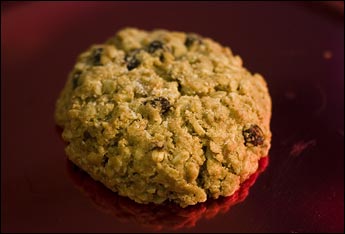
Saying my eating habits are normal compared to my women runner-friends—or the running community in general—isn’t saying much, and it didn’t take long to think of several recent conversations I’ve had with my women runner-friends about our bodies and weight. Some usual culprits: “Cute shorts! I could never wear them, with my butt, but they’re cute on you!” “I would cycle more, but you don’t burn as many calories as you do running.” “None for me. I don’t want to cancel out my run.” (This last one, in response to an offer of a home-baked cookie).

Why can't we just eat the cookie without guilt?
When I asked one of the experts I spoke with to weigh in on the idea that all women athletes must suffer from some form of disordered eating, she sighed, and said, “Most Americans do.” If you read the Women’s Running story, you know why this is a terrible thing (you could break your own bones, people!).
So where does this leave us? I’d like to start the conversation by offering a few examples of how I’m changing my own thinking and behaviors as a result of writing the story, and therefore becoming more aware of how dangerous and pervasive disordered eating is:
1. I read Intuitive Eating, by Evelyn Tribole and Elyse Resch, which advocates eating based on hunger, and have tried to incorporate its main principles into my eating/training life. Almost everyone I talked to for the story recommended reading it, and I love its emphasis on pleasure, relaxation and slowing down at mealtimes. One mental shift I made as a result: I have completely divorced the idea of burning calories from working out. I don’t care how many calories a given workout will burn; and when I refuel post-workout, I really, truly listen to my body, taking regular breaks to assess whether I’m still hungry, what my body really needs, whether that particular food still tastes good. I’m almost embarrassed to report how revolutionary this is for me—I didn’t even know I was scarfing mindlessly until I made conscious efforts to not do so!
2. I’ve tried to completely eliminate “fat talk,” which we women have a bad habit of bonding over. I’m friends with smart, interesting women, which makes it absurd that many conversations start with: “My thighs are so fat.” “No, they’re not. My thighs are so fat.” How boring! Let’s talk instead about why women feel the need to bond over this—have you ever heard two dudes become better friends by talking about how their jeans fit?

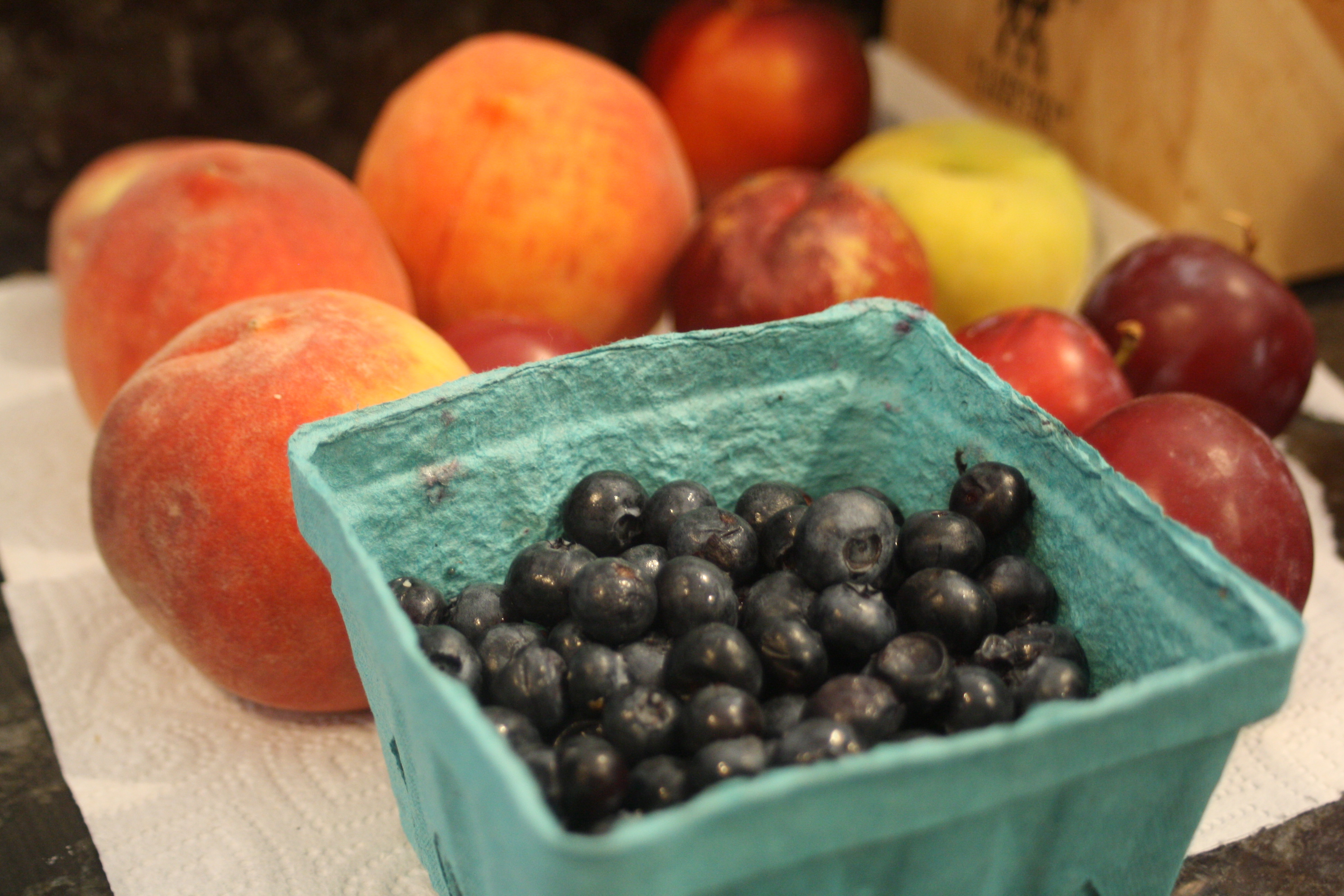
Sometimes, I want a pint of blueberries. Other times, I want a brownie. I'm trying to respect myself and my body in both scenarios.
3. I’ve ordered the sandwich when everyone else is ordering salad. Or I’ve ordered the salad when everyone’s eating fries. Or otherwise eating according to what my body needs, not what my plate looks like compared to other women’s plates (again … I didn’t even know I was doing this until I tuned in). 
4. I’m easing back into yoga again to try to maximize my body awareness—i.e., my ability to truly be in touch with what my body needs on any given day, on any given moment. I was one of those kids who did sun salutations next to my mom as a toddler, and I’ve never *not* done yoga. But I’m committing to actually practicing it regularly, dipping into a couple of classes offered for free or cheap through my building and my gym, and ordering a Seane Corn yoga DVD at the suggestion of my yoga-instructor-friend, Lauren. Check out her terrific yoga blog here.
Did you identify any of your own behaviors after reading the story, or even just skimming this blog post? Do you and your runner-friends, or swimmer-friends, engage in fat-talk? Have you had any “light-bulb moments” in which you realized you needed to change such behaviors? Share your thoughts below if so.








 Amy Reinink