The upside: Progress five weeks after olecranon surgery

Have you guys heard the brilliant, beautiful Tig Notaro stand-up set about the worst year ever? The gist: Notaro, a comedian, was diagnosed with cancer; lost her mother to a freak accident; survived a breakup; and almost died from an intestinal condition. Then, she stood up on stage and talked about it all, turning the most awful parts of it into comedy. In the set, she says that given all that’s happened, she simply couldn’t stand up on stage and talk about a bee going down the 405 (one of her more popular jokes).

Similarly, I feel like I can’t sit at my laptop and tell you about how my first couple of runs back were tough, but how, golly, things are getting easier now! That’s true (yesterday, I managed my first post-injury 30-minute run without stopping), but my heart’s just not in it.

I was actually all set to write about that first run today until I read Katie’s most recent post on Run This Amazing Day. She writes about how her blog, which started as a place for her to talk about running and injuries, and to poke fun at her own inadequacies, was turned upside down, along with her life, when she faced a tragedy of her own last summer.

She writes:

“I was overwhelmed by the graciousness of the human spirit … that situation dragged me out from under my rock and pinned me to the wall, naked, an apple on my head and a bulls-eye taped square over the softest part of my heart.”

If life is full of loss and tragedy and sadness, then the thing that keeps us afloat, the barely-visble upside, is the fact that we get to experience the kindest side of human nature in the aftermath of those losses and tragedies. We also find a more tender, compassionate, authentic self waiting to emerge to meet that kindness.

Take, for example, the (relatively minor) tragedy of the broken elbow I’m now rehabbing. Here are a few examples of the graciousness of the human spirit I’ve experienced as a result of my (relatively minor) struggles:

The lifeguard who offered to loan me his goggles after I angrily threw mine on the pool deck upon realizing my arm didn’t work quite yet on my first day back in the pool after elbow surgery; and the fact that this lifeguard has applauded my progress every day in the pool since then, saying things like, “Wow! You would never know you’d had surgery!” The brother-in-law whose post-injury message was not a light-hearted joke meant to minimize the situation, but a heartfelt: “You’ll get through this. You’re one of the strongest women I know.” The friend who cancelled her dinner plans to spend some time on the couch with me when she heard I was laid up. The barrage of cards from my mom at various stages of my recovery.

And yes, it is also the feeling of victory after the first time you run 30 minutes in a row without stopping after a long hiatus, or the first time your injured arm can manage a feeble, blessed stroke through the water.

3 Comments

Filed under Uncategorized

Fine tuning: Progress four weeks after olecranon surgery

My physical therapy appointments start and finish with my PT measuring how far I can flex and extend my recently-repaired broken elbow. Usually, I leave his office feeling buoyant and optimistic after netting 10 percent gains in either direction after an hour of hard, focused work, especially in the elusive extension category.

Last Wednesday, I was thrilled to clock in at 20 percent extension at the beginning of the appointment, meaning I only have a 20-degree bend in my arm when I try to straighten it like a normal human. After an hour of painful, frustrating exercises, I expected to break 20.

“Twenty-one,” my therapist said, turning away to write the number on my chart.

“What?” I said. “No! How is that possible?”

“You’re reaching your end point now,” my therapist said. “You know how to push your elbow as far as it will go. That’s a good thing. But now, we’ll see progress as gaining a degree or two week by week.”

As a runner, swimmer and skier, I’m familiar with how it feels to arrive at a plateau like this one, where progress becomes a game of inches or seconds rather than miles or minutes. It’s the difference between learning to ski as a beginner, when you can find yourself on intermediate slopes at the end of the day, and tinkering with your technique as an expert to address tricky, hidden bad habits. Or, it’s the difference between your first year of distance racing, when every event brings a PR, and racing several years into your “career,” when you wonder if you’ll ever break your own PR again. Either way, I recognize this fine-tuning stage as the place where the hard work really begins.

As a result, I’m refocusing my expectations, and reminding myself constantly that tiny improvements can lead to transformational outcomes. I’m trusting the process and doing the work I know will lead to long-term success. As always, I’m trying hard to develop patience.

In the meantime, I’m making sure to express gratitude for the gains I am making. This week, those gains included my first successful post-surgery swim! I tried to swim on the first day I was allowed to in mid-February, but ended up kicking for an hour instead after learning that my left arm simply didn’t work yet. Last week, I was thrilled to discover that I could manage about 500 yards of gentle freestyle, broken up by lots of kick sets—huge progress!

I also ran for the first time post-surgery. I’ve been allowed to run for weeks, but my doctor was correct in guessing that it “probably won’t feel very good.” But I felt stable enough on Friday to manage four half-mile repeats on the treadmill at 8:30-minute-mile pace (which felt like a sprint … sigh). Progress!

1 Comment

Filed under Uncategorized

Motivation Monday: The self-compassion edition

Whether I’m training for a PR or rehabbing an injury, as I am right now, I strongly believe in the motivational power of self-compassion. So you can imagine my delight when this TEDx talk from Kristin Neff, who I interviewed for Go easy on yourself: Cutting yourself a break once in a while can help you cut weight, turned up in my inbox just a few days after I broke my elbow. It’s worth a watch, no matter where you are in your training or rehabbing efforts.

Also motivating me this week: Continued progress in my efforts to rehab my recently repaired broken elbow. I can put my hair in a ponytail with ease, and I’ve eked out a few more degrees of flexion and extension in physical therapy.

My first swim last week was pretty demoralizing. I discovered that I can’t manage a single pull with my injured left arm yet—not in terms of strength, not in terms of mobility, not in terms of anything. So I tossed (OK, angrily threw) my goggles onto the pool deck and spent the next hour repeating a long kick set, feeling bad about my elbow. When I got out, the lifeguard stopped me and cheerfully said: “You’ve got incredible leg stamina! How many yards did you just get in?” It led to a lovely conversation in which he made me feel awesome about my efforts and encouraged me to keep up the good work with my elbow rehab. The whole encounter reminded me of The Human Scale, which Cheryl Strayed, the author of Wild, wrote for the advice column Dear Sugar. She writes:

“In your darkest hour you were held afloat by the human love that was given to you when you most needed it. … You learned that your idea of God as a possibly non-existent spirit man who may or may not hear your prayers and may or may not swoop in to save your ass when the going gets rough is a losing prospect. So it’s up to you to create a better one. A bigger one.  Which is really, almost always, something smaller.

What if you allowed your God to exist in the simple words of compassion others offer to you? What if faith is the way it feels to lay your hand on your daughter’s sacred body? What if the greatest beauty of the day is the shaft of sunlight through your window? What if the worst thing happened and you rose anyway?”

Read the whole column about the rafts of human compassion that allow us to live through suffering here. What’s motivating you this week?

1 Comment

Filed under Uncategorized

Motivation Monday: The “best outcomes” edition

What a difference a week makes!

I went to the doctor for my first post-op appointment on Valentine’s Day, and got a present way better than flowers or candy: I got news that the titanium plate holding things together in my elbow is working beautifully, meaning I got to shed the monster splint I had been wearing since my surgery. I also got cleared to start occupational therapy, and to get back to some light activity, with the addition of swimming this Thursday.

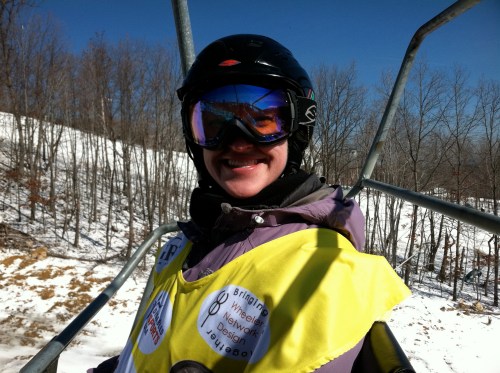
I'm smiling because I'm about to shed my splint and sling.

I’m smiling because I’m about to shed my splint and sling.

You will be unsurprised to hear that after that appointment, I drove right to the gym and took a spin class, which felt better than anything I’d done all week.

I also got to start occupational therapy, which was both exciting and humbling. And, of course, painful. I could go the rest of my life without having to sit in another room full of therapy tools, trying to bring a sleeping muscle back to life. This time, it’s my triceps and biceps impeding my post-surgery recovery progress, and my lovely, kind therapist, who speaks with a thick Scottish brogue, sympathetically described the exercises that will help me regain my mobility as “murder.” He also said it’s almost impossible to do these exercises too much on my own, so I’ve been spending every waking minute flexing and extending my left arm as far as it will go, which means I spend a lot of time wincing and making strange little whimpering noises.

Giving me optimism is the wide range of stuff I can do again, which includes taking care of my basic needs without pain or struggle (I can almost manage a ponytail, which I now consider to be the holy grail of arm mobility and fine motor skills), taking spin classes, lifting with my legs, running (though it feels a little too jarring on my arm right now), and, as of Thursday, swimming.

Also giving me optimism is something my OT said during my initial appointment on Friday. In his list of questions about my pain level and daily life, he asked if I play sports or work out regularly. At the time, I was wearing my Bolder Boulder 10K “Sea level is for sissies” T-shirt, and carrying a water bottle with the National Ski Patrol logo on it. When I told him that yes, I play sports and work out to a level that may be described as obsessive, he replied this way: “Good. Athletes usually have the best outcomes. They’re motivated to do what they need to do to get better, and they know how to work hard.”

I still have a long way to go. But today, I’m full of hope that I can work toward that best outcome.

3 Comments

Filed under Uncategorized

Coping tips for injured athletes

I’ve struggled at times to know how to approach this elbow injury of mine.

It is a minor injury that was fixed with a quick surgery that will leave me stronger than ever. It is a crappy, unfair injury caused by the most mundane activity known to man (walking out my front door) that has caused me real pain and suffering. It is a small thing compared to what we’ve been through over the past three years, during which we have lost three parents, Steve has deployed once, and I have suffered two other equally random injuries. It is the straw that broke the camel’s back, considering all that has come before it. It is all of these things. It is none of these things.

What I know for sure: For an athlete of any kind, an injury represents a loss. That’s what strikes me most when I read through all the comments from all the athletes who have responded to Motivational quotes for injured athletes, which is by far the most-read post I’ve ever written for this blog. An injury represents a loss of opportunity and a loss of a sense of identity and a loss of a source of strength and support. It takes away your confidence, your mojo and your standing Saturday-morning plans, all of which requires you to spend time recovering emotionally as well as physically. And like any loss, it needs to be grieved and mourned and honored and reconciled before the griever can continue life as usual.

The trick is to find a way to mourn and grieve and honor your loss while also keeping it in perspective, and without going to the dark side. In other words, acknowledging that you are, in fact, going through something hard, and honoring your feelings of anger and fear and loss, while realizing that the correct response is not analysis or judgement but instead just self-compassion.

I can’t quite bring myself to post photos of me smiling and giving a thumbs-up in a splint post-surgery. I’m instead going to share a few lessons I’ve learned about coping with injuries.

Accept yourself as you are right now. It helps me to remember that I’m not only rad when I’m skiing powder in Austria, but also when I’m reading a book on the couch. It’s also helpful to remind myself that it’s OK to feel sad and angry and a little bitter–that I’m not choosing to feel this way, but can choose how to respond to it.

Practice self-compassion. I’ve been a huge proponent of self-compassion–the act of talking to yourself gently during times of trouble, as you would to a friend–ever since writing Go easy on yourself: Cutting yourself a break once in a while can help you cut weight
for WeightWatchers.com’s men’s site last year. It’s a hugely helpful life skill that’s especially important during tough times.

Focus on recovery. Your doctor will give you instructions. These instructions, whether they are “PT three times a week for a month” or “Try not to move too much until you see me again,” are your new workouts. Treat them with the reverence you would a long run, or a difficult skiing drill, and believe that treating them this way will speed your recovery. For me, that means taking things very, very slowly until my first post-op doctor appointment later this week.

Do what you can. I feel lowest when my friends are skiing or running or otherwise playing outside in ways that I can’t yet. I feel highest when I’m thinking about the things I can do–such as swim, in just a few weeks, which sounds simply amazing to me right now. And though they were never my thing before this injury, I’m also looking forward to taking a few spin classes during my recovery. And of course, I’m taking some solace in the fact that can still work in the clinic or man the radio to stay involved with the ski patrol.

Connect with others who have coped with similar injuries. In 2010, after breaking my right wrist, I connected with Gary Anderson, who found this blog after suffering a nearly identical wrist break (during the same ice storm!), wrist surgery and post-surgery recovery to mine around the same time. Anderson, also a runner, is race director of the Clifton Caboose 5K, and after months of commiserating about our injuries, we met at the race later that year. While recovering from ACL reconstruction surgery in 2011, I found it helpful to follow pro skier Michelle Parker’s recovery from the same injury. I’m looking forward to meeting others who have fractured olecranons and had open-reductions with internal fixations to fix them (Anyone out there break their elbow and get it put back together with a chunk of metal? Anyone?).

Posing with Gary Anderson post-race.

Posing with Gary Anderson post-race in 2010.

Surround yourself with positive reinforcements. I’m a big fan of quotes that nail the way I’d like to feel. Right now, these two from Mary Anne Radmacher are my favorites:

“Courage doesn’t always roar. Sometimes courage is the little voice at the end of the day that says, ‘I’ll try again tomorrow.'”

“Speak quietly to yourself and promise there will be better days. Whisper gently to yourself and provide assurance that you really are extending your best effort. Console your bruised and tender spirit with reminders of many other successes. Offer comfort in practical and tangible ways — as if you were encouraging your dearest friend. Recognize that on certain days, the greatest grace is that the day is over and you get to close your eyes. Tomorrow comes more brightly.”

Find out how others have coped. Here’s where you come in: What’s your best post-injury coping mechanism?

16 Comments

Filed under Uncategorized

100K Vertical Challenge; Dolomiti Superski; curveballs

It’s hard to know where to start. So I’ll just give you the Cliff’s Notes version of the past month of our lives.

Our trip to the Dolomites and other European ski resorts was heaven on earth. If it weren’t for wanting to get back to the States for the 100K Vertical Challenge on Feb. 4, we may have stayed forever.

Amy_deck Amy_ski Amy_wine italy_sunset

Less than 12 hours after we returned from Europe, in the most random and absurd injury imaginable, I slipped on some ice in my driveway and broke my left proximal ulna (left lower arm, near my elbow). The bad news: It has to be surgically repaired, and I won’t be able to ski for three months after I have the surgery on Thursday. The good news: The recovery will allegedly be quick and painless otherwise, with only about a week in a splint before I can do physical therapy.

Yesterday, Steve completed the 107 runs of the Second Annual 100K Vertical Challenge at Whitetail in a little more than 12 hours. The event, which many of you supported, raised more than $20,000 for Two Top Adaptive Sports, enabling the nonprofit to provide even more ski and snowboard lessons to wounded warriors and other disabled athletes in the D.C.-Baltimore area. I had a great time manning the support table and keeping track of the two-dozen participants’ runs.

Amy_support

I’m sure I’ll have lots more to say about our trip in the coming weeks, and more to say about coping with missing the rest of the ski season. But for now, I’m too sad and angry about the sudden post-trip turn of luck to say much more about either (as Tig Notaro says, “God giveth, and God taketh away, but sometimes, God just keeps on taking-awayith.”). Also, while typing isn’t too terribly painful, it’s not my left arm’s favorite activity. In the meantime, please send your kindest and healingest thoughts, and hold the jokes about calcium and bubble wrap.

5 Comments

Filed under Uncategorized

Moving on

I have so much I want to tell you guys!

I want to talk about my take-away impressions from my CrossFit story. And my awesome ski-season-prep workout, which has, after about six weeks of concentrated work, already made my legs more powerful and agile. And my upcoming vacation to the Dolomites in Italy. And the fact this upcoming vacation will involve me and Steve skiing around with a guide named Mario. And the fact that the skier-friend who referred us to Mario described him as “the Italian stallion.” And about how after a year in Virginia Beach, we’re moving.

For today, let’s just focus on the latter. For the past year, I’ve been splitting my time between Silver Spring, Md., and a little duplex a block away from the beach in Virginia Beach, Va. I’ve driven back and forth more times than I care to count. I’ve made a bunch of friends who I’ll be sad to leave. I’ve discovered beautiful new running routes I wish I could take with me. But all in all, it’s time to go, and when I head toward D.C. on I-64 for the last time today, I’ll do so with a happy heart, thanks to all the memories of the people and things that have formed a safety net to carry me through the heartaches of the past year.

My runner-friends gathered at Zia Marie's for a goodbye dinner.

My runner-friends gathered at Zia Marie’s for a goodbye dinner.

The view on my favorite Virginia Beach run.

The view on my favorite Virginia Beach run.

What happens next, in the simplest terms possible: Our stuff goes into storage. We go on vacation (see above segment about the Dolomites and Mario the Italian stallion). We finish the 100K Vertical Challenge at Whitetail. We come back to Silver Spring, where I’ll freelance per my usual routine (but without the constant four-hour commutes between there and Virginia Beach). And then—well, I’ll let you know more when we figure it out.

4 Comments

Filed under Uncategorized

A Whitetail New Year’s Eve

How much fun did we have at Whitetail over New Year’s Eve weekend?

Enough fun that I am seriously sad that I’ll be missing out on even more fun up there over the next few weeks while we’re in Europe. (Though, as my mom pointed out: Not so sad that we’re not going on the trip. Let’s not get crazy here.)

A few snapshots of our weekend:

Amy_Steve_WT

WT_Morning

Amy_Steve

2 Comments

Filed under Uncategorized

First post of 2013: Second Annual 100K Vertical Challenge

I don’t do resolutions, per se, but I do believe that the end of the year is a great time to take stock of what worked in the previous year and what didn’t. Looking back at the events and accomplishments that were most memorable and meaningful to me in 2012, I keep landing on the First Annual 100K Vertical Challenge, and I want to dedicate my first post of 2013 to the Second Annual 100K Vertical Challenge on Feb. 4. (Obviously, Steve and I are planning to be there.)

Still smiling at the halfway point of the First Annual 100K Vertical Challenge at Whitetail Resort.

Still smiling at the halfway point of the First Annual 100K Vertical Challenge at Whitetail Resort.

Longtime readers will remember that last year, Steve and I were among a couple dozen other crazies to ski 100,000 vertical feet in one day—roughly 107 runs at Whitetail Resort—to raise funds for and awareness of the Two Top Mountain Adaptive Sports Foundation, a nonprofit adaptive sports program at Whitetail. Many of the folks who take skiing or boarding lessons through the program are wounded warriors from the Baltimore/Washington region.

Posing with our ski-patrol friend, Chuck, a former Marine who participated in last year's event.

Posing with our ski-patrol friend, Chuck, a former Marine who participated in last year’s event.

The event was memorable for so many reasons—the sheer challenge of it, the camaraderie with the other participants and the joy and exhilaration of spending an entire day focused on nothing but skiing. But most of all, it was memorable because I got to see the joy and exhilaration on the face of Todd Love, a Marine who lost both his legs in Afghanistan, as he carved gorgeous turns on his sit-ski the morning of the event.

It was meaningful because it allowed me to express gratitude: for the fact that Steve, and many of our dear friends, have made it home from their deployments healthy and safe; for the sacrifices that Love and others have made without any expectation of getting something in return; and for the fact that the talented volunteers at Two Top offer folks like Love a chance to experience the sense of freedom, joy and exhilaration that drive me to the slopes again and again.

Last year's 100K crew.

Last year’s 100K crew.

If you’re in a position to give, please consider donating to this incredible cause. From the bottom of my heart, I appreciate any support you can offer.

HOW TO DONATE:

There are two ways you can donate to my campaign: by pledging a certain amount for each run I complete (I’ll let you know the number after the race), or by donating a fixed amount ahead of time via Two Top’s website. To do so, scroll down the page and click the “donate” button. Fill in the “purpose” box with “Amy Reinink—100K Vertical Challenge.”

Donations can also be made via check to: Two Top Mountain Adaptive Sports Foundation, Inc., 10914 Claylick Rd. Mercersburg, PA 17236

Curious about what the challenge is all about? Check out my post about last year’s event. Or, check out Fox 5′s coverage of the event. Or, watch the video below, in which I make a few choice appearances:

4 Comments

Filed under Uncategorized

The Cult of CrossFit

The thunk of metal punctuates the grunts and groans resounding through the no-frills gym at CrossFit Bethesda as several people lift and lower barbells loaded with heavy plates in a white-walled, mirrorless room.

Workout participants—including a college kid in a baseball cap, an older woman with a neat silver bob and several fit-looking middle-aged men and women—move swiftly through several exercises. They do “double unders,” jumping rope so quickly that the rope passes beneath their feet twice for each jump; use gymnastic rings to do reverse pushups; and hurl heavy medicine balls high against the wall in front of them, catching them on the rebound.

“Come on! Push!” instructor Marcus Taylor shouts as he circles the room.

Less than 20 minutes later, the group staggers to a halt, the workout complete. Several lie flat on their backs, exhausted.

“That happens a lot,” CrossFit Bethesda owner Judd Borakove says, grinning as he surveys his sweaty devotees.

Welcome to CrossFit, a short, intense workout program that has exploded in popularity in recent years. Greg Glassman, the former gymnast who invented CrossFit in Santa Cruz, Calif., in 1995, defines his program as “constantly varied, functional movements, executed at high intensity,” aimed at those training for everything from combat to a 5K race.

Originally favored by military and law enforcement types, CrossFit now draws participants of all fitness levels to more than 5,000 locations around the world, including several in the Bethesda area.

But even as it has grown in popularity, CrossFit has stirred controversy and drawn criticism. The American College of Sports Medicine, among other organizations, has warned that its focus on speed and intensity can sacrifice form—and even lead to exercise-induced rhabdomyolysis, a potentially fatal condition that leads to the release of muscle fiber contents into the bloodstream.

On CrossFit message boards, the condition often appears in cartoon form as “Uncle Rhabdo,” a companion of “Pukie the Clown,” who shows up when you work out so hard that you vomit. But the possible health risks are no joke.

Finish reading this story on the Bethesda Magazine website.

1 Comment

Filed under Uncategorized